
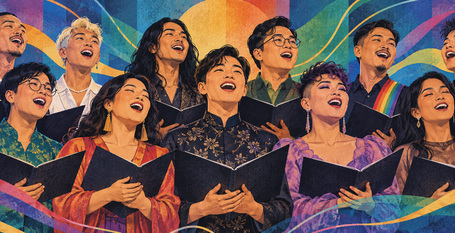
A choir makes room for a curious kind of visibility. Your voice is present, but it sits alongside other voices. A musical phrase belongs to the group, even as each singer brings a different breath, language and history to it.
Across Asia, the Hand in Hand festival provides one meeting point for LGBTQ+ choirs and their allies. Its next advertised gathering is in Fukuoka from 10 to 12 November 2028. That is a future date to note, rather than an event happening this season: the organiser’s site still lists the venue, programme and registration as coming soon.
The previous Singapore edition took place from 13 to 15 June 2025. Its published programme brought together groups including Sing! Men’s Chorus, Pride Choir Tokyo, G Voice and The Harmonics. These are past performances, but the programme remains a useful introduction to the range of choirs connected through this regional gathering.
The organisers describe Hand in Hand as growing from the Proud Voices Asia network. Their ambition is connection across borders and backgrounds. The music gives that ambition a practical form: a shared stage where different ensembles can bring their own repertoire and musical character.
There are also ways to begin much closer to home. Singapore’s Sing! Men’s Chorus says its mission is to connect people through making and enjoying male choral music. Its joining page lists a minimum age of 21, the ability to carry a tune and a commitment to regular rehearsals. Anyone interested should check the current requirements with the chorus before making plans.
In Hong Kong, The Harmonics describes itself in its organiser-supplied art-mate profile as a choir for LGBTQ+ people and allies. That wording matters: participation is a musical relationship as well as an identity label. Different choirs have different membership arrangements, and one group’s invitation should not be assumed to apply to another.
For listeners, the invitation can be simpler. Look up a local choir’s own programme, hear what it chooses to sing and return for another concert. A community ensemble deserves attention for its sound and artistic decisions as well as the welcome it hopes to offer.
The next regional festival may be two years away. The rehearsal, the listening and the possibility of finding a place in the music need not wait for it.
Which song would you want an Asian queer choir to bring to a regional festival, and what would it say about your community?