













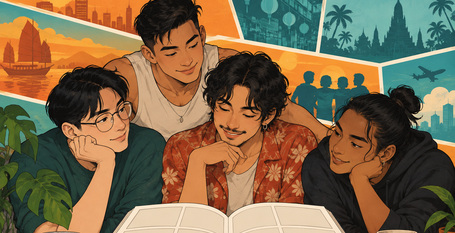
A single character can be asked to carry an unreasonable burden: to represent a community, explain its difficulties and still remain interesting as a person. A book built around four gay Asian friends offers a different starting point for a reading discussion.
Mike Curato’s Gaysians is an adult graphic novel published by Algonquin Books on 3 June 2025. It received the 2026 Stonewall Book Award’s Barbara Gittings Literature Award, announced on 25 January. This is a reading selection prompted by that recognition, rather than news of a new release or a review of the complete book.
The publisher’s synopsis introduces AJ, who moves to Seattle in the early 2000s hoping for reinvention. His new circle includes K, a drag queen; John, a gamer; and Steven. Friendship, love and a violent attack form part of the story’s advertised premise.
The interest of that four-person structure is the space it offers for difference. Shared racial and sexual identities need not produce matching temperaments, ambitions or ideas about belonging. That is a useful question to carry into the book: how much room does each friend have to be difficult, funny, mistaken or unlike the others?
The American Library Association describes the Stonewall awards as recognising exceptional English-language works relating to LGBTQIA+ experience. The award is a reason to give this title attention; readers will still bring their own tastes and expectations to it.
For a book group, the graphic-novel format offers another line of conversation. Consider how an expression, a pause between panels or the arrangement of figures carries information alongside dialogue. These are things to look for when reading, rather than claims about particular pages we have examined.
The US setting also deserves to remain specific. An Asian diaspora story in Seattle may invite recognition from readers in Singapore, Manila or Hong Kong, while leaving other experiences unfamiliar. Neither response is a failure. A worthwhile discussion can hold recognition and difference together without turning the characters into representatives of everyone.
The publisher lists the hardcover at 384 pages. Its synopsis includes violence, so a group choosing its next read can flag that in advance without reducing the conversation to the book’s hardest event.
Which queer Asian book has given you characters who felt like individuals, rather than representatives of a whole community?


 Printable Version

 RSS Feed: Lifestyle


Reader's Comments
Be the first to leave a comment on this page!
Please log in to use this feature.