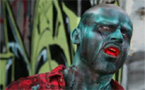
The Australian Film Classification Board has refuse to classify the “soft-core” version of a 'gay zombie' film which was slated to screen twice next week at the Melbourne International Film Festival.
President Cristina Fernandez de Kirchner on Wednesday convened a ceremony at the Casa Rosada government house in downtown Buenos Aires to formally sign into law a bill making Argentina the first country in Latin America to legalise marriage for same-sex couples.
Fridae CEO Stuart Koe told attendees at the Be Heard! pre-conference for MSM at the AIDS 2010 conference in Vienna that health promoters should take advantage of the potential of the web to reach gay men and MSM more effectively.
Referring to protesters from the anti-gay Westboro Baptist Church as "hate criminals" who were picketing outside the concert venue, the pop singer tweeted to fans asking them not to respond to any provocation.
The latest decision comes after a "no-action" vote last month by a bloc of anti-gay nations which stalled the International Gay and Lesbian Human Rights Commission's 3-year application process for consultative status to the United Nations Economic and Social Council.
Fridae.com's Hong Kong correspondent, Nigel Collett, meets the Reverend Steve Parelli and his partner José Ortiz, of the US NGO Other Sheep, to find out.
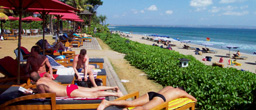
With a recent wave of gay Asian tourists flocking to Taipei for holiday, the city is being dubbed the San Francisco of Asia, and the government might do well to take notice.
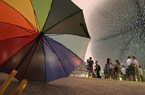
Some 30 participants, both Chinese and expatriates, gathered at the UK Pavilion at the Shanghai World Expo at a LGBT meeting organised by the British Embassy in Beijing and the British Consulate-General Shanghai.
Nigel Collett reviews Prayers for Bobby, a 2010 Golden Globe-nominated film based on the true story of Mary Griffith (played by Sigourney Weaver) – now a prominent campaigner for the US NGO, Parents, Families, Friends of Lesbians and Gays (PFLAG) – whose son, Bobby was gay and committed suicide in 1983.
Different spaces and even a different context of the use of the spaces have different behavioural conventions inscribed on them, and people have generally come to respect the prevailing convention. Should the police leave cruising grounds alone if the unwitting public is very unlikely to stumble on any activity?




















 RSS Feed:


